Home › Road, Street, and Municipal Paving
Keep traffic moving with reliable road paving in Orlando, FL. We construct and resurface asphalt streets for municipalities, HOAs, and private developments. Our team manages milling, paving, and traffic control to deliver smooth, long lasting driving surfaces with minimal disruption.
Precision Asphalt Orlando provides professional road paving throughout Orlando, FL, Florida and the surrounding area. Our licensed, insured crew delivers safe, clean, on-time work with a free estimate before anything begins. Call or request your free quote.
Road, Street, and Municipal Paving in Orlando, FL
Precision Asphalt Orlando specializes in building and resurfacing public roads, neighborhood streets, and municipal pavements that stand up to Central Florida traffic and weather. Our crews work on city streets, county roads, subdivision networks, school access roads, and public facility parking loops throughout the Orlando area.
Road paving is not one-size-fits-all. A residential cut-through with light car traffic needs a different design than a bus route or a road serving heavy delivery trucks. We evaluate existing conditions, traffic loads, soil type, and drainage before we ever put a machine on the site. That is how we reduce premature cracking, rutting, and potholes that often show up when a job is rushed or underspecified.
Working in the Orlando climate requires planning around heat, storms, and humidity. Asphalt must be placed at the right temperature and compacted before it cools. Our team schedules work to avoid daily thunderstorm patterns when possible, stages material deliveries to prevent delays, and uses compaction methods that achieve density quickly so your new pavement cures correctly and lasts longer.
How We Plan a Successful Road Paving Project
Every road, street, and municipal paving project with Precision Asphalt Orlando starts with a detailed assessment. We look at three primary areas: the subgrade, the existing pavement condition, and how the road is actually used day to day.
Subgrade and base evaluation: Central Florida soils can be sandy, soft, or poorly compacted from past construction. We test bearing capacity, probe for soft spots, and check existing base thickness. Where we find weak areas, we plan undercutting and replacement with stabilized base material, or cement or lime treated subgrade, so the new asphalt sits on a solid foundation.
Traffic and loading: A residential cul-de-sac that only sees passenger cars can often use a thinner asphalt structure than a collector road that carries garbage trucks, school buses, and delivery vehicles. We use Florida Department of Transportation (FDOT) design guidance and your municipality’s standards to select proper layer thicknesses and asphalt mix types.
Drainage and ponding: In Orlando, frequent heavy rain means poor drainage is one of the fastest ways to ruin a paved surface. During design we identify low spots, blocked swales, and undersized inlets. We then adjust grades, introduce crown to the roadway where feasible, or rework ditches and curb lines so water moves off the pavement quickly instead of soaking into cracks and joints.
Step by Step: Our Road Paving Process
Precision Asphalt Orlando follows a consistent, field-tested process for road, street, and municipal paving that reduces disruptions and delivers reliable results.
1. Site preparation and traffic control: Before any milling or excavation starts, we set up MUTCD-compliant signage, cones, flaggers, and detours. For neighborhood streets we coordinate with HOAs or city staff, provide notice flyers, and sequence work so residents can still reach their homes.
2. Milling or full-depth removal: For resurfacing projects, we typically mill off 1 to 2 inches of existing asphalt to create a uniform profile and smooth transitions to driveways and cross streets. For severely failed roads with alligator cracking or base failure, we may perform full-depth reclamation or remove the pavement and base down to a stable layer.
3. Base repair and stabilization: After milling, weak areas become obvious. We dig out soft spots, then rebuild with graded aggregate base or stabilized base that is compacted in layers with vibratory rollers. In wetter pockets, we may install underdrains or geotextile fabric to separate the base from unstable native soils.
4. Tack coat application: Before placing new asphalt, we apply an asphalt emulsion tack coat on the existing surface. This thin layer acts like glue so the new lift bonds to the underlying pavement. Skipping or thinning this step is a common cause of slippage cracks and delamination, which is why we monitor application rates closely.
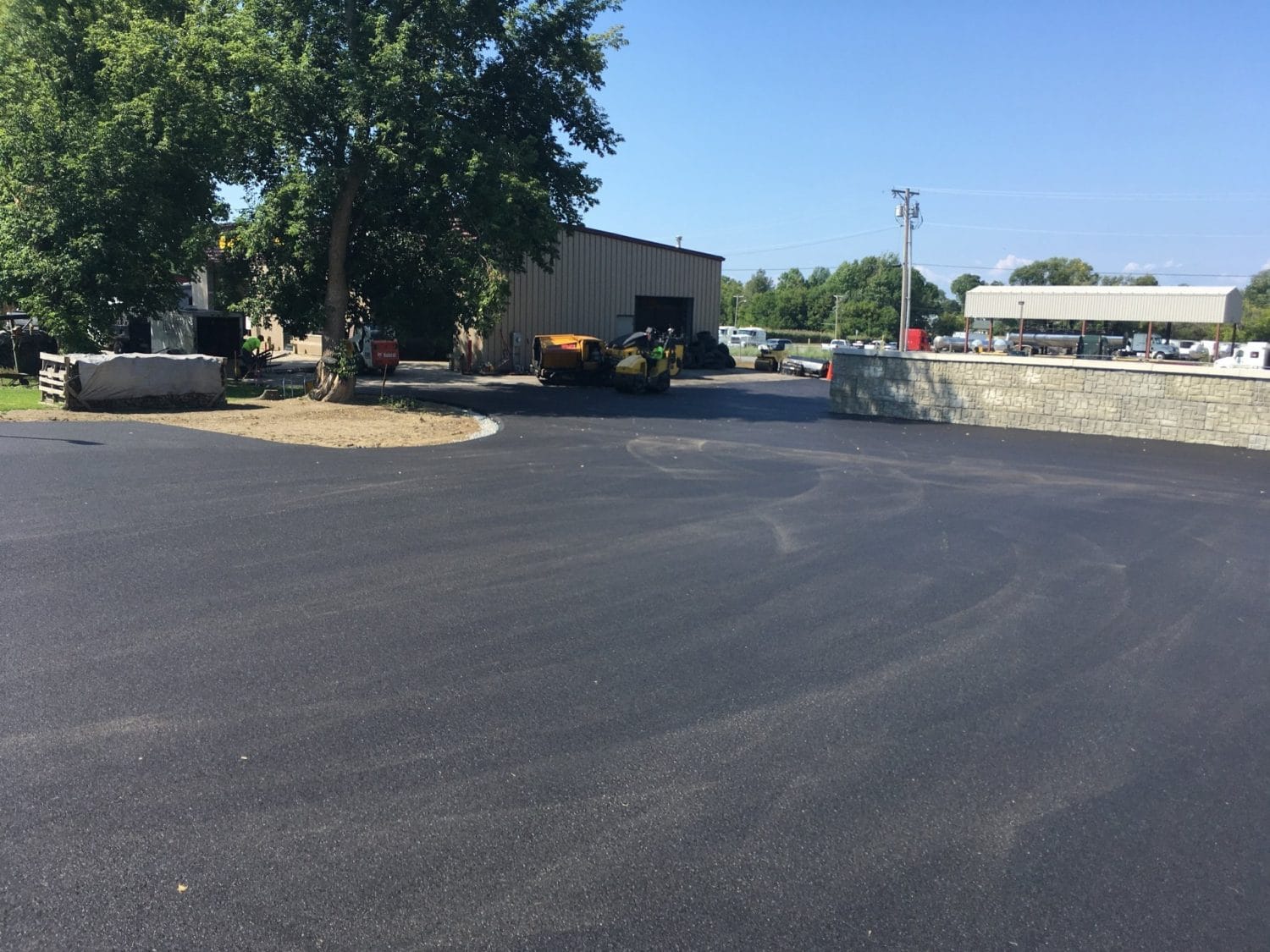
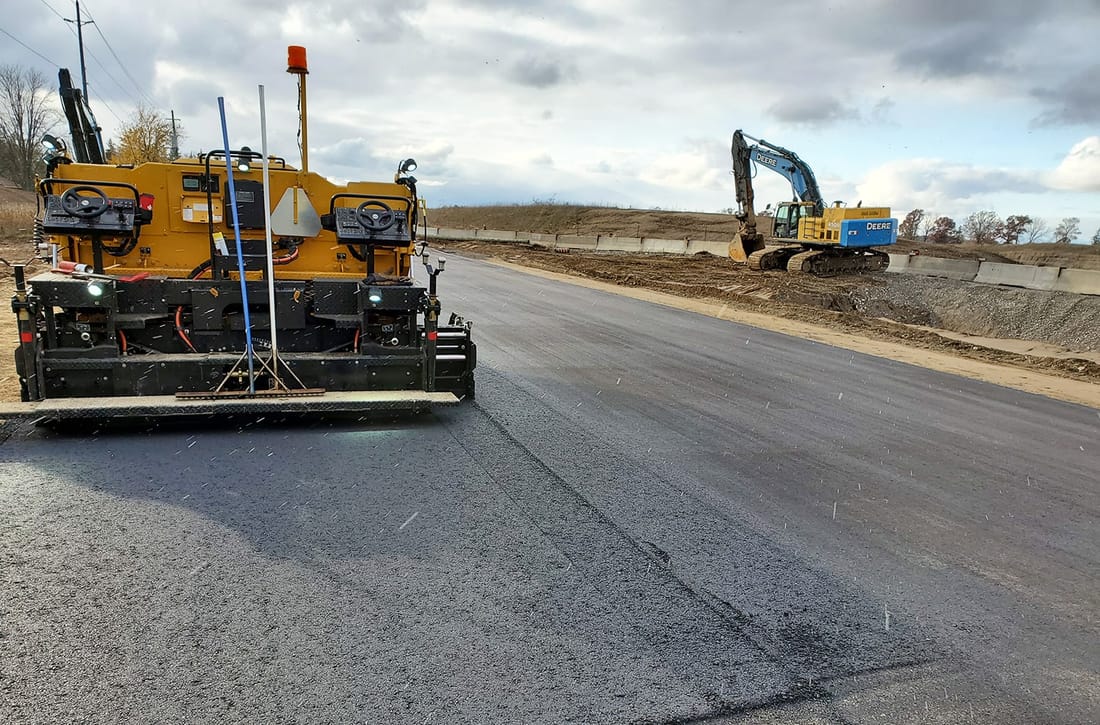
5. Asphalt placement: We place hot mix asphalt using a self-propelled paver, maintaining consistent speed and head of material to avoid segregation and bumps. Our crews use different mixes for different layers, such as structural base course for strength and finer surface course for smoothness and skid resistance, based on local standards.
6. Compaction: Rollers follow the paver closely while the asphalt is still hot. We use a combination of steel drum and pneumatic tire rollers to achieve target density. Proper compaction limits air voids, which reduces water intrusion and extends pavement life.
7. Joint and transition finishing: Longitudinal joints between paving passes and tie-ins to intersecting roads or driveways are hand-checked and compacted carefully. We know from local experience that poorly built joints are often where Orlando roads first start to ravel or break down, so we treat them as critical points, not afterthoughts.
Material Choices and Mix Designs for Orlando Roads
Not all asphalt is the same, and for municipal paving projects in Orlando, material selection has a direct impact on how long the surface will last under sun, rain, and traffic.
Asphalt mix types: For most city streets and local roads, we use FDOT approved Superpave mixes or municipality specified equivalents. Heavier truck routes may get a stiffer, higher traffic level mix, while low speed residential streets can use mixes that prioritize a smooth, quiet ride. We review the agency’s standards and then fine tune within those parameters.
Lift thickness and layering: A typical neighborhood road might receive a 1.5 inch surface course over an existing structural base, while a reconstructed bus route could involve a 2 inch or thicker structural layer plus a separate friction course. Thicker lifts offer more structural capacity but must be matched to the compaction equipment and underlying base condition.
Temperature management: Orlando’s high temperatures can soften asphalt that is not properly designed or placed. We coordinate with local asphalt plants to get mixes with the correct binder grade for Central Florida conditions and manage haul distances so the mix arrives hot enough for proper compaction but not overcooked. During cooler snaps in winter, we adjust rolling patterns to account for faster cooling.
Recycled materials: Where allowed by the specifying agency, we incorporate reclaimed asphalt pavement (RAP) in a controlled way. This can reduce cost and environmental impact without sacrificing performance, but it must be properly blended and tested. We follow lab-designed mix formulas, not guesswork, so public roads stay durable and safe.
Common Road Problems in Orlando and How We Address Them
Central Florida roads experience a mix of heavy rain, intense sun, and occasional flooding. Precision Asphalt Orlando is familiar with the problems this creates and we build our projects to avoid or correct them.
Alligator cracking and base failure: This pattern of interlaced cracks usually indicates structural problems below the surface rather than a simple cosmetic issue. Instead of just overlaying and hiding the damage, we cut out failed panels, rebuild the base, and then pave. For larger failed areas, full-depth reclamation can be a cost effective option that recycles in place and creates a new stabilized base.
Rutting and shoving: On bus routes, turn lanes, and stop-and-go segments, heavy loads can cause grooves or bulges. We counter this with stiffer surface mixes, thicker structural sections, and attention to compaction so the asphalt does not deform in the Orlando heat. Where rutting already exists, we typically mill to remove the deformed layer before paving.
Ponding and edge breaking: Low spots that hold water speed up pavement deterioration. On curb-and-gutter streets, we adjust paving elevations and cross slopes so water flows to inlets instead of pooling. On rural and edge-of-pavement roads, we reinforce shoulders, reshape ditches, and improve slope transitions so water drains away and vehicle wheels are properly supported.
Reflective cracking: When existing pavement has joints or cracks that can reflect through a new layer, we may use crack relief layers or targeted repairs before resurfacing. This is especially important on older roads in Orlando that were built in phases or with different materials underneath.
Project Timing, Traffic Management, and Safety
Municipal and street paving affects residents, school schedules, and local businesses. Precision Asphalt Orlando plans each project to minimize disruption while keeping safety at the forefront.
Seasonal timing: In Orlando, asphalt paving can be performed year round, but we avoid heavy overlapping with the peak of the rainy season when possible. For larger projects, we coordinate with the municipality’s capital improvement schedule, utility work, and school calendars to choose windows that reduce traffic impact.
Staging and phasing: For neighborhood road programs, we usually pave in sections, opening one or two blocks at a time while keeping alternate access available. For collector roads, we use lane shifts and phased construction so at least one travel lane in each direction remains open, if feasible. We plan detours that avoid school zones and emergency routes when at all possible.
Traffic control and communication: All our traffic control setups follow MUTCD guidelines and any local Orlando or Orange County requirements. We provide notice to residents and businesses in advance, post clear signage, and use cones, barrels, and flaggers to guide drivers safely through work zones. For night work on busier corridors, we deploy adequate lighting and maintain strict safety protocols for both workers and drivers.
Reopening and cure times: Properly compacted asphalt can typically be opened to traffic soon after rolling, but for municipal work we coordinate with inspectors and project managers to schedule striping, manhole adjustments, and final walkthroughs before full reopening. We provide clear guidance on when heavy truck traffic can resume so early rutting and damage do not occur.
Costs, Bidding, and What Local Agencies and HOAs Should Ask
Road paving costs in Orlando depend on a mix of technical and logistical factors, not just the price per ton of asphalt. Understanding these drivers helps cities, counties, and HOAs compare bids fairly.
Key cost drivers: Project size and mobilization, depth of milling or removal, base repair quantity, chosen asphalt thickness, traffic control complexity, and required night work or accelerated schedules all influence pricing. Short, scattered segments in multiple locations often cost more per square yard than a continuous stretch, because equipment must be moved and reset.
Specifications and standards: Whether you are a municipal engineer or an HOA board member, insist that bidding contractors reference specific standards, such as FDOT sections or your city’s public works specifications. Precision Asphalt Orlando is familiar with local requirements for Orlando, Orange County, and surrounding jurisdictions, and we build our proposals to match those documents so there are fewer surprises later.
Questions to ask bidders: Ask how they will handle drainage issues, what density targets they use for compaction, how they sequence work in residential areas, and whether they include base repair allowances or treat it only as a change order. Inquire about mix designs, sources of materials, and who will perform density and thickness testing.
Long term value: A proposal that includes appropriate base stabilization, correct mix selection, and careful joint construction will usually outperform a low bid built around minimal prep and thin overlays. Precision Asphalt Orlando focuses on lifecycle cost, not just initial price, so your roads, streets, and municipal pavements in Orlando last longer and require fewer disruptive repairs.