Home › Industrial and Heavy-Duty Asphalt Paving
Handle heavy traffic with industrial asphalt paving in Orlando, FL. We design and install thick, reinforced asphalt surfaces for truck yards, loading docks, and warehouses. Our team accounts for axle loads, turning areas, and drainage to reduce rutting and premature failure.
Precision Asphalt Orlando provides professional industrial asphalt paving throughout Orlando, FL, Florida and the surrounding area. Our licensed, insured crew delivers safe, clean, on-time work with a free estimate before anything begins. Call or request your free quote.
Industrial Asphalt Paving for Orlando’s Toughest Worksites
Industrial asphalt paving is very different from paving a driveway or small parking lot. At Precision Asphalt Orlando, we design and build pavements that can stand up to loaded semis, forklifts, cranes, container stacks, and constant braking and turning.
Our industrial and heavy-duty asphalt paving services are tailored to Central Florida conditions. Orlando’s heat, high UV exposure, and frequent summer storms change how pavements age and how they must be built. We choose mixes, thicknesses, and base designs that resist rutting in 95-degree weather, withstand standing water during downpours, and recover quickly so your operation can stay open.
Whether you manage a distribution center near the airport, a manufacturing plant in an industrial park, or a heavy truck yard along I-4, Precision Asphalt Orlando focuses on structural strength first. We look at axle loads, traffic patterns, and your specific equipment, then design an asphalt section that is appropriate for industrial use, not simply the minimum code requirement a general paving contractor might suggest.
How We Evaluate Your Site and Design Heavy-Duty Pavement
Industrial asphalt paving starts with a detailed site assessment, not a one-size-fits-all quote. Our estimator and field supervisor walk the entire area with you to identify loading zones, turning paths, fueling areas, dumpster pads, dock approaches, and any soft or wet spots in the existing surface.
We often core or test the existing pavement and base to see what is under the surface. In Orlando, many sites are built on sandy soils, so we pay close attention to drainage and subgrade support. If the base pumps water when trucks move over it, or if we see alligator cracking and depressions, we know the structure has failed and needs more than a simple overlay.
With that information, we design a pavement section that might include stabilized subgrade, graded aggregate base, and multiple asphalt lifts with different mix types. For example, we may use a stronger base mix with larger stone at the bottom, then a high-stability surface mix at the top where tires contact the pavement. This layered approach helps the asphalt carry heavy loads without rutting or shoving at dock doors and tight turns.
Step-by-Step: Our Industrial and Heavy-Duty Asphalt Process
Once a plan is agreed on, Precision Asphalt Orlando follows a clear construction process so you know what will happen each day on site.
1. Site preparation and demolition. We remove existing asphalt where needed, mill or cut tie-in areas, and excavate soft spots. For industrial projects, we do not hesitate to over-excavate weak areas and rebuild them, because these spots often become failure points under heavy traffic.
2. Subgrade stabilization and proof-rolling. We compact the exposed soil, correct soft areas, and may introduce lime rock or other stabilizing materials if the native soil is too loose or holds water. We then proof-roll the area with a loaded truck so you can see any deflection before we pave.
3. Base installation and compaction. A graded aggregate base or limerock base is installed to a specified thickness, then compacted with vibratory rollers. For heavy-duty yards and truck lanes we usually recommend thicker bases than those used in retail parking lots, because Orlando’s sandy soils can shift when saturated.
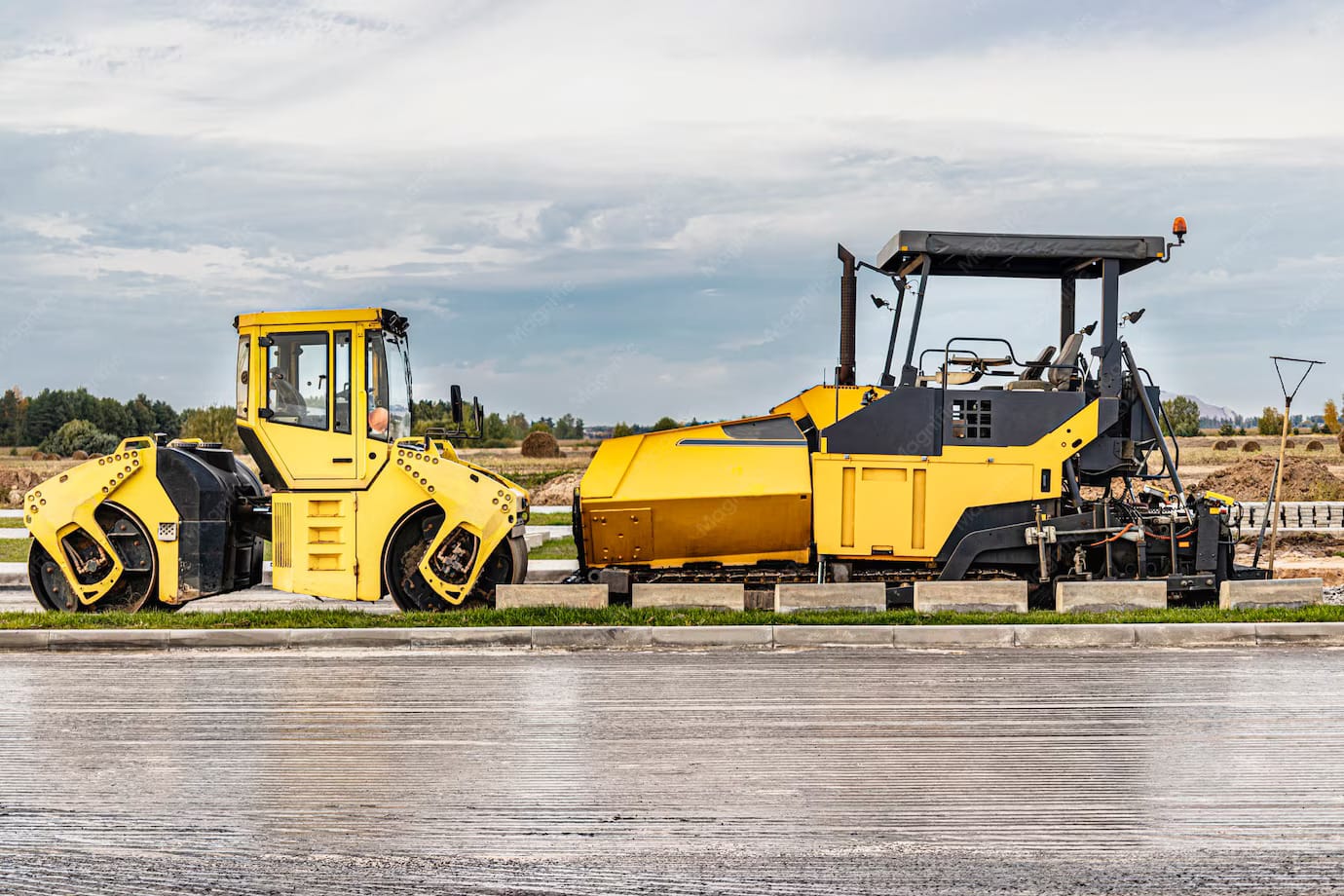
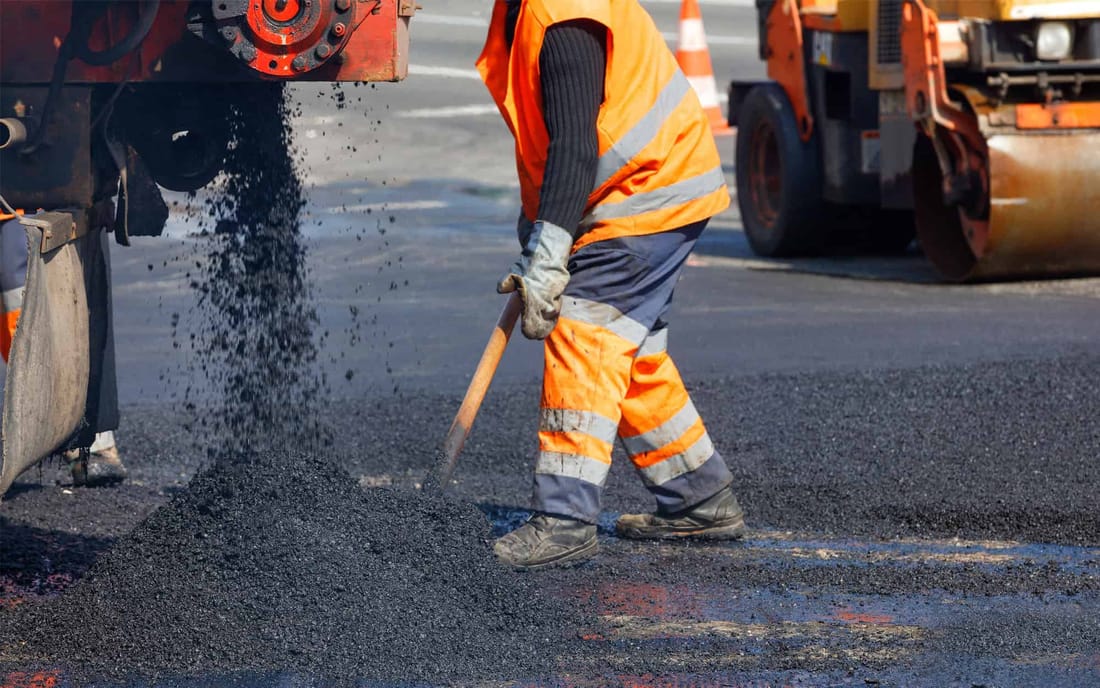
4. Asphalt paving in lifts. We place the asphalt in one or more layers (lifts), depending on the thickness required. Each lift is placed with a paver, then compacted with steel and pneumatic rollers to reach target density. Joints are staggered and treated carefully, since cold or misaligned joints can become future crack lines in high-load areas.
5. Detailing, striping, and safety markings. After the mat cools, we add striping, loading zone markings, truck route arrows, and stencils for dock numbers or safety zones. In industrial environments we can add high visibility markings for pedestrian walkways, forklift crossings, and fire lanes to support your safety program.
6. Walkthrough and turnover. Before we leave, we walk the site with you to review drainage, transitions, and markings. We explain curing and traffic timing, and give you clear guidance for putting heavy trucks back on the pavement without risk of surface damage.
Material Choices and Thickness for Heavy Truck Traffic
The durability of industrial asphalt paving depends heavily on material selection and thickness. At Precision Asphalt Orlando, we match your pavement structure to your heaviest loads, not just your average traffic.
For distribution centers with frequent 18-wheeler traffic, we often recommend a total asphalt thickness of 5 to 8 inches over a properly compacted base, with thicker sections in loading and turning areas. For container yards, scrap yards, or concrete plants where point loads are extreme, we may increase thickness further or combine asphalt with reinforced concrete pads in very high stress zones such as under legs of silos, dumpsters, or heavy equipment parking.
We typically specify high-stability hot mix asphalt with a well-graded aggregate structure. In Orlando’s heat, softer mixes can rut or shove under slow heavy loads, so we use mixes appropriate for higher pavement temperatures. We also pay attention to the surface texture, choosing a mix that balances skid resistance during summer thunderstorms with cleanability for operations that require frequent sweeping or vacuuming.
Finally, drainage features are built into the design. Industrial yards are often flat, but even a small grade is important to move water away. Standing water accelerates stripping and pothole formation, especially on older base layers. We set elevations to move water toward inlets or swales without creating abrupt transitions that could interfere with forklifts or low clearance equipment.
What Drives Cost and How We Control It
Heavy-duty asphalt paving is an investment, and understanding what drives the price helps you plan and avoid surprises. The biggest cost factors are total square footage, asphalt thickness, base preparation, drainage improvements, and access constraints that affect how efficiently we can work.
If the existing base is in good shape, an industrial overlay with localized base repairs can be more economical than full reconstruction. However, if we see widespread base failure, continuing to resurface on top will lead to repeated problems and higher long-term costs. At Precision Asphalt Orlando, we show you core photos, test results, and field observations so you can see why we recommend a given approach.
We also look at phasing to reduce downtime. Many Orlando industrial sites run 24/7, or have critical shipping windows. We can pave in sections, work at night or weekends, or focus on alternate truck routes so operations continue while work is in progress. This planning reduces indirect costs to your business, which often matter just as much as the paving price.
Material pricing can change with oil markets, but we help manage that by finalizing scope clearly and locking in schedules. When appropriate, we may suggest alternate designs such as thicker base with slightly reduced asphalt thickness, or strategic use of concrete in very high stress areas, to keep the project both durable and within budget.
Maintenance, Repair, and Timing in Orlando’s Climate
Orlando’s climate affects not only how we build industrial asphalt paving, but also how it should be maintained. High UV exposure, frequent rain, and occasional fuel spills in truck yards all work against your pavement. Establishing a maintenance plan early helps you get a full life cycle out of the surface.
For heavy-duty sites, we recommend periodic inspections to catch early signs of rutting, reflective cracking, or pumping at joints and utility trenches. Addressing these issues with localized milling, patching, or crack sealing is far less disruptive and expensive than waiting for large areas to fail. In high traffic lanes and around dock bays, we often see distress sooner than in storage or parking zones, so these are key areas to focus on.
Timing of work also matters. While Orlando allows year-round paving, we typically schedule large industrial projects during drier months when possible to reduce weather interruptions and achieve optimal compaction. When summer storms are unavoidable, we plan production in smaller sections so we can protect fresh pavement before rain hits.
Precision Asphalt Orlando stands behind its work and remains available after completion to help you monitor performance. If your traffic patterns change, such as adding more trailers, heavier equipment, or new loading docks, we can reassess and recommend targeted reinforcement so your pavement continues to match the demands of your operation.